
What if I told you the indoor air quality in your home is about ten times worse than the air outside? That might sound unbelievable. You clean your house, mop, vacuum, and dust every Saturday morning. You even change your HVAC air filters every month. So how could your indoor air really be that much worse? The answer is actually pretty simple, and I’ll share some ways you can make it better.
Why is indoor air quality so important?
Most of us spend most of our day indoors. In fact, people can spend up to 22 hours inside each day between work, sleep, and other activities. Because we spend so much time inside, it’s important to make sure the air in our homes is free from harmful chemicals and mold. Modern homes are built much more tightly than those from 50 years ago, which means these chemicals are more likely to stay trapped inside. Children are especially at risk because they breathe in twice as much air as adults. So, how can you check the air quality in your home and improve it?
First, get your air tested!
Getting an indoor air quality (IAQ) test is the first step to finding and fixing problems. While anyone can do a test themselves, not everyone knows how to read the results. That’s why it’s important to have a Certified IAQ Professional handle your sampling. A complete assessment usually includes mold air samples, surface samples, and VOC testing. In this article, we’ll focus on VOC testing, which stands for volatile organic compounds.
What are VOC’s(volatile organic compounds)
VOC’s are compounds that are found in building products, personal care products, cleaning products etc. These compounds will off gas into the air in our homes and greatly reduce the indoor air quality. A few sources of VOC’s are:
| Building Materials | Home & Personal Care Products | Activities |
| Paint, varnishes, caulks, adhesives, Carpet, vinyl flooring, Composite wood products, Upholstery and foam | Air fresheners, cleaning products, Cosmetics, Fuel oil, gasoline | Smoking, Dry cleaning, photocopiers, Cooking, hobbies, Burning wood |
What does the indoor air quality test look like?
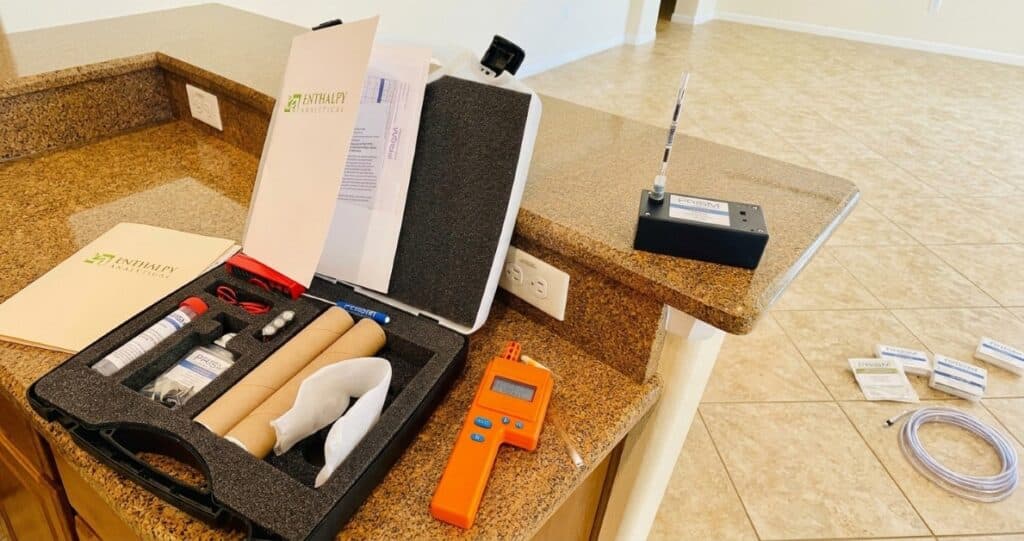
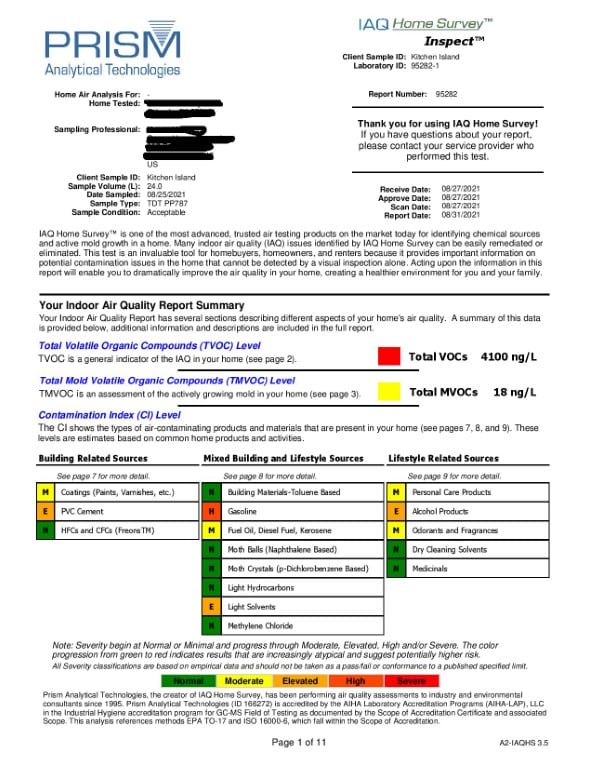
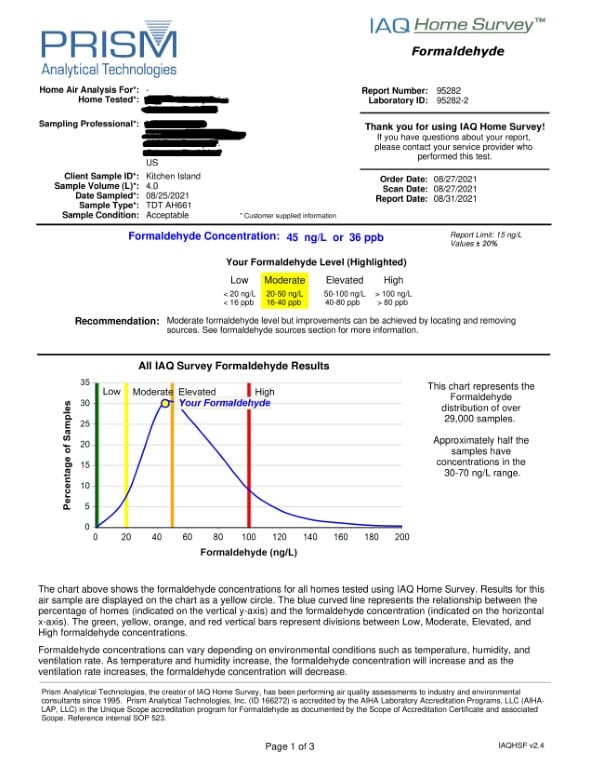
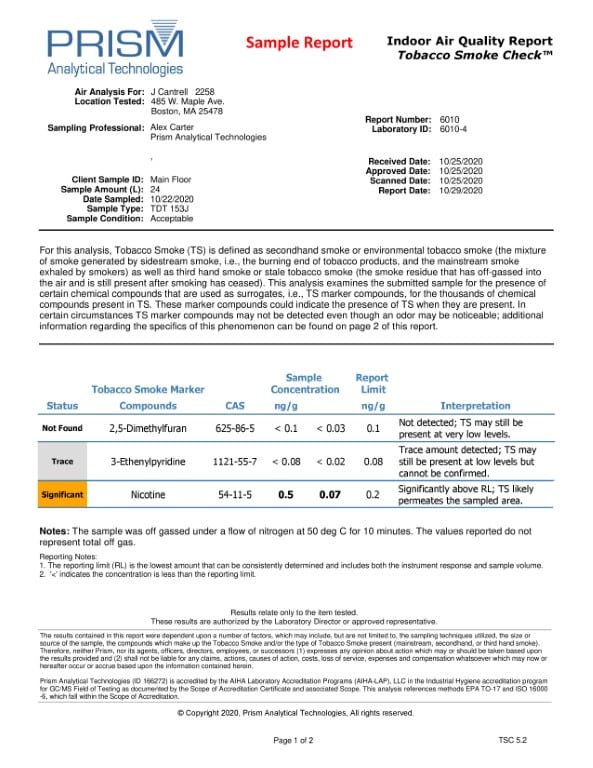
For a VOC test, a professional will visit your home and set up an air pump that runs for two hours. Afterward, the test kit is sent to a lab, and you usually get the results in two to five business days, depending on the type of test. The report will show the levels of the compounds you wanted tested, ranging from mild to severe. Below are some sample reports for a full VOC test, formaldehyde, and a separate nicotine test.
My results are back so now what?
Once an IAQ professional reviews your results, they can recommend appropriate improvements. Many airborne contaminants originate from personal habits. For example, switching to eco-friendly cleaning products can help. If your home has an attached garage with stored chemicals, relocating them to an outdoor storage unit may be advised. Installing a fresh air intake connected to your HVAC system is an effective way to improve air quality. In humid climates, it is best to run this air through a dehumidifier first. Introducing fresh air helps dilute indoor chemicals and reduce their concentration. After implementing corrective measures, it is advisable to conduct another test to confirm the issues have been resolved.
We are IAQ certified professionals as well as NORMI members. If you feel you may have an issue with your indoor air quality you can feel free to give us a call at 407-633-1661 or visit us at our website.